The Book

Their story, beautifully told.

Everyone who loves them remembers something different. Recollective brings those memories, photographs and voices together into one written family story — and turns it into a finished Book.

$795one finished Book, once

Gathering your family's memories is free. The finished Book is $795, paid when you're ready to create it.

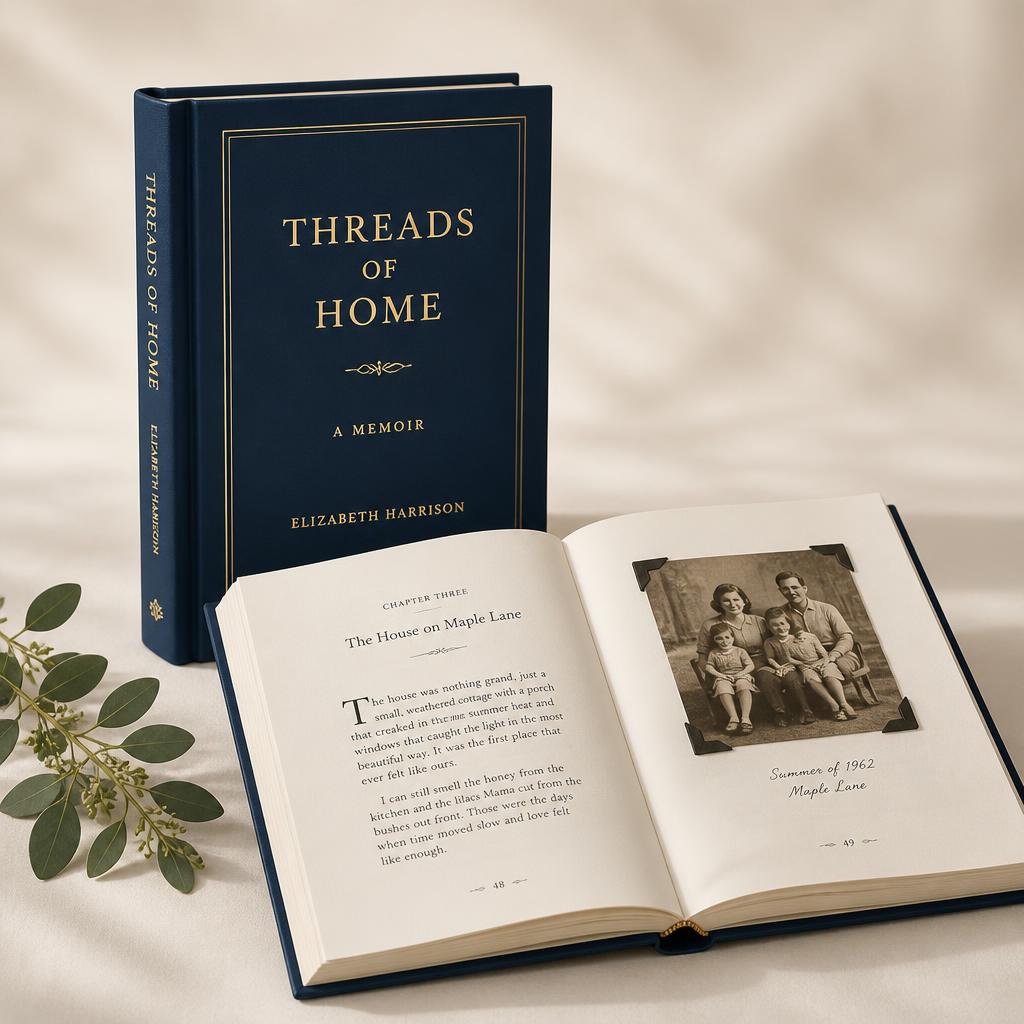
The Book shown closed beside an open copy revealing typeset pages

Chapter I · First one in the building

Nadia taught at Bellfield for nineteen years. She walked to work past the allotments on Verney Lane.
From an example Book

See inside the Book.

Every Book is built from the memories, photographs and perspectives one family shared. These four pages are from an example Book so you can read how it actually reads.

An example family, written by Recollective from example memories, to show how a Book reads.

A chapter begins

Chapter I

First one in the building

Nadia taught at Bellfield for nineteen years. She walked to work past the allotments on Verney Lane.

According to Ivan, she was out of the house before he had his shoes on. She filled the green thermos the night before and left it by the door.

Sofia remembers a dent in the green thermos. It was not precious, Nadia said; it was just hers.

From an example Book9

This is a written story, not a transcript or a questionnaire.

A photograph, where it belongs

Chapter II

The allotment on Verney Lane

A vintage photograph of a woman outdoors, printed full-width beside the chapter's prose
In a Book, the caption is written by the family who shared the photograph.

Nadia places the allotment in 1979, or possibly 1980. It was full of couch grass and somebody's old bath.

Ivan wanted to give it back. She dug it over on her own that winter. By the spring there were beans, and he stopped talking about giving it back.

Petar remembers a shed with a padlock that never worked; Dad kept saying he would fix it. Mum kept a chair in there and sat in the doorway with the thermos when the rain came on.

Sofia says Saturdays were the allotment, and she took one child, never both. You got her to yourself for four hours and talked about anything you wanted.

From an example Book17

The family's photographs live inside the story, uncropped.

Two people remember it differently

Chapter II

Why he sold it

Martin's account is that his father sold the garage because the big place opened on the bypass. Martin is certain of it.

Fiona's view is that he sold it because his back had gone and he would not admit it. For Fiona, the bypass had nothing to do with it.

Martin thinks he was relieved to be out of it. Martin says Fiona thinks he was heartbroken.

From an example Book41

Many voices reveal more of someone than any one person could alone.

The night the water came up

Chapter III

The water came up in a night

Petar remembered 1988, when Verney Lane flooded and the allotments went under. Nadia was on the bottom path in wellingtons, sandbagging with the Kelly boys.

Lena drove over and could not get down Verney Lane. Nadia was already there with a shovel.

Ivan found the thermos still on the side that morning. That is how he knew she had gone out in a hurry.

From an example Book53

Editorial quality: restrained, specific, unhurried prose.

No one person knows the whole story.

A daughter remembers the house. A brother remembers the years before it. A friend from work remembers a version of them nobody at home ever met. Recollective invites all of them, and writes what they remember into one story.

  • A child

    remembers the ordinary weeknights nobody else was there for.

  • A sibling

    remembers who they were long before they became a parent.

  • A partner

    remembers the decisions, the worries and the private jokes.

  • A friend or colleague

    remembers the side of them the family rarely saw.

  • Not one interview.
  • Not one person writing everything down.
  • Not a questionnaire exported into a template.

Many voices, written into one coherent family story.

Memories and photographs become the story.

  • A written memory

    becomes a scene, in its own time and place, with the details kept exactly as they were given.

  • A photograph

    becomes part of the page it belongs to — printed whole, never cropped to fit a template.

  • A spoken memory

    becomes a contribution in their own voice, transcribed and kept with the story.

  • Someone else's perspective

    becomes another side of the same day, held next to the first rather than replacing it.

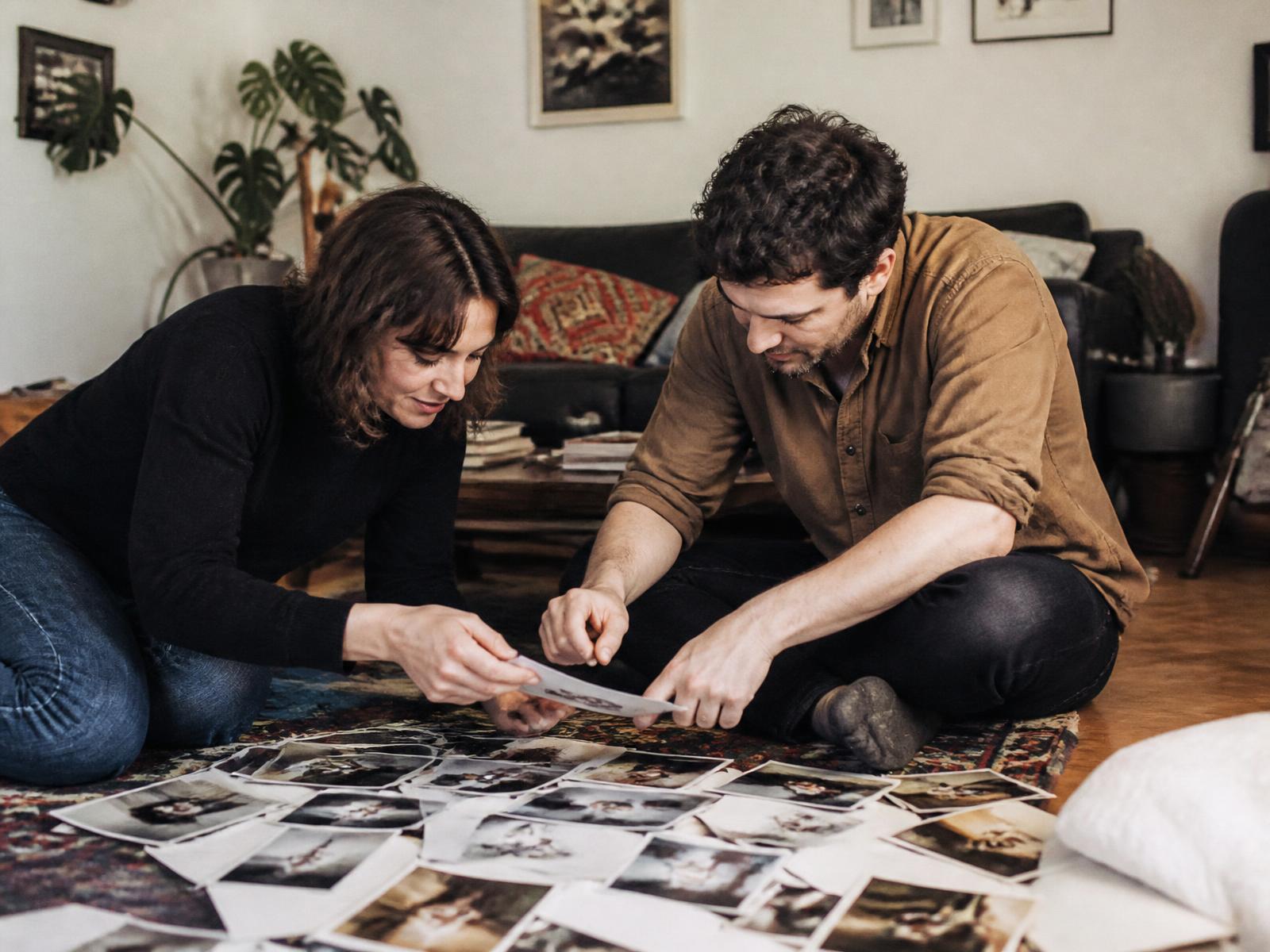
Two family members sitting together looking through a box of printed photographs

Written as a story, not a transcript.

Recollective does not staple submissions together. The story is given structure and chapters, contradictions are held rather than flattened, and the specific details — a dented green thermos, a padlock nobody fixed — are the ones kept. Restraint is the point: nothing is embellished, and nothing is invented on your family's behalf.

Petar remembered 1988, when Verney Lane flooded and the allotments went under. Nadia was on the bottom path in wellingtons, sandbagging with the Kelly boys.

Lena drove over and could not get down Verney Lane. Nadia was already there with a shovel.

Ivan found the thermos still on the side that morning. That is how he knew she had gone out in a hurry.

From an example Book · not a customer testimonial

Recollective's writing is machine-assisted and family-governed: the story is composed from your family's own contributions, and you read and revise the manuscript before anything is finished.

How the Book comes together.

  1. 01

    Your family gathers the story

    Invite the people who knew them. Memories, photographs, voice recordings and different perspectives accumulate over time — a weekend, a season, a year.

  2. 02

    Recollective understands what matters

    As the material builds, the people, threads and connections emerge — along with the parts of the story nobody has told yet.

  3. 03

    When you're ready, create the Book

    You decide the story is ready. That is when the $795 Book is purchased — not before.

  4. 04

    Recollective writes the manuscript

    Your family's material is shaped into chapters and written as a continuous story. Manuscript creation is being rolled out with our founding families.

  5. 05

    Your family reads it

    You read the manuscript in full and can revise it before it is approved. Nothing is finished without you.

  6. 06

    The story becomes the Book

    Once the content is approved, the story becomes your family's finished Book. We confirm production and delivery details with each family directly.

There is no countdown and nothing expires. Families can keep remembering for as long as they need to.

The Book

$795

One-time, per Book. No subscription.

Everything your family has gathered, thoughtfully shaped into one beautiful finished story about someone you love.

  • The whole family's memories written into one coherent story
  • The photographs your family shared, kept inside the story
  • Recollective's help finding the last stories worth telling before you write
  • A full editorial review — you read and revise before anything is approved
  • Your finished Book

Free until the Book.

  • Start a project for the person whose story you're keeping
  • Invite as many family members and friends as belong in it
  • Write memories, add photographs, record voices
  • Follow the story as it grows and discover what's missing

When you're ready.

  • $795, once, when your family is ready
  • Turns everything gathered into the written manuscript
  • Includes your family's read-and-revise review
  • No subscription, no trial, nothing to cancel

What you can count on.

  • Private, by invitation

    A Recollective project is only visible to the people your family invites into it.

  • Your family's words

    The Book is written from what your family contributed. Nothing is invented on their behalf.

  • You see the story before it's final

    The manuscript is read and revised by your family before it is approved.

  • Built by our family, with palliative-care physicians

    Recollective was created by our own family, informed by physicians who sit with families at the end of life.

Questions families ask.

When do we pay?
Only when your family decides to create the Book. Gathering memories, inviting people and building the story costs nothing. The Book is $795, once.
Can we start before we're sure about the Book?
Yes, and most families do. Start with one memory, invite the people who remember, and decide about the Book later.
Who can contribute?
Anyone your family invites — children, siblings, partners, grandchildren, friends and colleagues. Everyone can invite more voices as the story grows.
What happens to our photographs?
They become part of the story around them, printed whole rather than cropped to fit a layout.
Can someone record a memory instead of writing it?
Yes. Voice is a first-class way to contribute; recordings are transcribed and kept with the story.
Can we keep adding memories after we buy?
Your project stays yours and your family can keep contributing to it.
Who can see our story?
Only the people invited into your project. Nothing is public.
Do we get to read the story before it's finished?
Yes. Your family reads the full manuscript and can revise it before approving it.
Start with one memory.

You don't need to know the whole story yet. Bring together the people who do, and see what comes back.

4 example pages · gathering is free · the Book is $795